Something I left out of my paper, that I thought I'd expand on briefly...
What implications does the Breivik case have on the globalization theory?
Mass migrations of peoples across the globe have damaged the very notion of the nation-state identity in the international system. Nation-states, states for a certain ethnicity, have been the dominant force in international politics since its inception in 1648 with the Peace of Westphalia. One belonged to a state which for their ethnicity - Norway for Norwegians, France for the French, Mongolia for the Mongols etc. etc.
However, with people, ideas, and business moving around the globe in an unprecedented rate the idea of a nation-state becomes a blur. An Iraqi now lives in Norway. An American now lives in Portugal. Nation-states are losing the purpose of why they were created. Thus we come to a point, is the notion of a nation-state outdated? Supra-National organizations as the EU, AU, and the UN all serve to diminish the power of the nation-state and instead foster a collective identity. With collective identity, it means that some identity is being lessened or put on the back-burner. National heritage now becomes a shared regional heritage among a very diverse group of people. Is there anymore national heritage, in this case?
Furthermore, globalization goes to show that populations of developed countries are just as, or more, venerable as developing nations. Though developing nations have very serve problems, developed nations are now in a struggle for identity. Breivik is a perfect example. Breivik is from Norway, the West. Norway frequently takes high places in development, freedom, and living indexes as well as is known internationally for its peace initiatives. However, Breivik perceived immigrants from the MENA region as a threat to the very essence of who he was, and he framed this fear into a religious perspective. With additional prodding from far-right politicians, scholars, and bloggers, Breivik choose to commit the heinous massacres on July 22. Does religion supersede national identity in globalization cases? Is religious violence the new protest to globalization, as national identity is no longer a safe haven for those who feel threatened?
The implications of globalization is the changing paradigms of international relations and international identity. Supra-national institutions, identities, and ideas (religion) will become more prevalent than belonging to a state. Religion will be brought up to the forefront of a conflict that may be entirely secular. The role religion will play in the future may increase; an irony to the secular way of thought the world operates now. By no means is this going to happen quickly, but it could certainly be a theme to look out for. Those who are skilled in religious peace may quickly become the newest hot commodity of globalization.
Showing posts with label Globalization. Show all posts
Showing posts with label Globalization. Show all posts
Thursday, November 17, 2011

Thursday, November 10, 2011
Is the Cure to Religious Violence a Global Mindset? An Irony
Teehan does it again. Though our first reading of his work (about evolutionary violence) opened my eyes, his conclusion certainly got me thinking. In his conclusion, it seems he is arguing for a "common faith that must be nurtured" in "terms of understanding the human condition" (219).
To me this sounds like in order to solve the problems of ingroup/outgroup, ethnic boundaries, and other divisions which promote violence; he argues for a new thought which bonds the global community together. His idea, is to bring a bigger picture to everyone so that boundaries are so small they won't matter. I could be wrong, but this sounds like he is advocating for a global identity.
The reason this is so interesting to me is that, through my research on the Breivik case and our study of many others, is that this global thought (globalization) is a main theory of religious conflict. How could one advocate for a global mindset when it is this thought that spurs violence in the first place?
I understand that with increasing globalization, a global mindset will develop. However, I fell like before this global identity develops (can there be an identity if you identify with everyone?), there will be more violence due to the backlash of the effects globalization has on society. the Norway bombing are is just an example of this backlash. Though I agree that we as society must "zoom-out" to a larger picture, I am also not a religious actor. I just thought it exposed an irony for me - can an idea both support and curb violence?
Maybe I was misreading this concept as argued by Teehan. While I agree that people need to see past divisions, it are these divisions which produce violence in the first place. I feel that this idea can be a component in peace theory, however, I am convinced there are stronger ideas in preventing religious violence.
To me this sounds like in order to solve the problems of ingroup/outgroup, ethnic boundaries, and other divisions which promote violence; he argues for a new thought which bonds the global community together. His idea, is to bring a bigger picture to everyone so that boundaries are so small they won't matter. I could be wrong, but this sounds like he is advocating for a global identity.
The reason this is so interesting to me is that, through my research on the Breivik case and our study of many others, is that this global thought (globalization) is a main theory of religious conflict. How could one advocate for a global mindset when it is this thought that spurs violence in the first place?
I understand that with increasing globalization, a global mindset will develop. However, I fell like before this global identity develops (can there be an identity if you identify with everyone?), there will be more violence due to the backlash of the effects globalization has on society. the Norway bombing are is just an example of this backlash. Though I agree that we as society must "zoom-out" to a larger picture, I am also not a religious actor. I just thought it exposed an irony for me - can an idea both support and curb violence?
Maybe I was misreading this concept as argued by Teehan. While I agree that people need to see past divisions, it are these divisions which produce violence in the first place. I feel that this idea can be a component in peace theory, however, I am convinced there are stronger ideas in preventing religious violence.
Saturday, June 25, 2011
"South China Sea, or me"
I came across an interesting article by Clyde Prestowiz on the U.S. economic condition and national security issues in East and South East Asia.
Prestowiz asserts that the national security establishment has taken us through a "detour" in the Middle East, and it is finally return to its attention to where it should be; East Asia (aka China).
He also states that since we have such a broad security blanket on the Pacific, our weathly companies know there is little risk in investing aborad, thus drawing money out of the U.S. economy.
Personally, it appears Prestowiz is a true realist with a Cold War tinge. While I loved this article and the way it got me thinking, it appears he is arguing that the U.S. should make the Pacific less secure in order to take the low-risk factor away from FDI in Asia. With this blanket gone, American companies would be more prone to invest back into America, while also making the American pull stronger for those Asian countries fearful of China's rise. He's also argues for more financial uniformity on free trade treaties, which I don't know much about, but it sounds more beneficial.
In essence, create an atmosphere which works for our interests; pretty realist.
If I am wrong on this, please correct me.
Its not that this whole idea doesn't make sense, if it would work, but that it kind of has the old Cold War 1 vs. 1 redux to it. Prestowiz is a veteran of Cold War, free trade, Reagan policies; he was commerce secretary during Reagan's administration. While I agree that Washington was too busy spending time in a unnecessary war in Iraq and running up the debt than paying attention to Asia, I don't think the U.S. should be actively looking for demons to fry. Instead of having another Cold War showdown with China that many speculate, we must double our diplomatic efforts in order to court China.
The world is different than in the Cold War, and we should adapt our policies accordingly. Veteran policy-makers of the Cold War do provide insight and wisdom, but it seems many have difficulties leaving behind the old "us vs. them" mentality. While Prestowitz's realist economic policies for the Pacific could work; we must be weary not to have China become even more aggressive and sense we cannot balance them out. Though some old concept apply in short term international affairs, there are many new ways to achieve long term relationships than ever before.

Prestowiz asserts that the national security establishment has taken us through a "detour" in the Middle East, and it is finally return to its attention to where it should be; East Asia (aka China).
He also states that since we have such a broad security blanket on the Pacific, our weathly companies know there is little risk in investing aborad, thus drawing money out of the U.S. economy.
Personally, it appears Prestowiz is a true realist with a Cold War tinge. While I loved this article and the way it got me thinking, it appears he is arguing that the U.S. should make the Pacific less secure in order to take the low-risk factor away from FDI in Asia. With this blanket gone, American companies would be more prone to invest back into America, while also making the American pull stronger for those Asian countries fearful of China's rise. He's also argues for more financial uniformity on free trade treaties, which I don't know much about, but it sounds more beneficial.
In essence, create an atmosphere which works for our interests; pretty realist.
If I am wrong on this, please correct me.
Its not that this whole idea doesn't make sense, if it would work, but that it kind of has the old Cold War 1 vs. 1 redux to it. Prestowiz is a veteran of Cold War, free trade, Reagan policies; he was commerce secretary during Reagan's administration. While I agree that Washington was too busy spending time in a unnecessary war in Iraq and running up the debt than paying attention to Asia, I don't think the U.S. should be actively looking for demons to fry. Instead of having another Cold War showdown with China that many speculate, we must double our diplomatic efforts in order to court China.
The world is different than in the Cold War, and we should adapt our policies accordingly. Veteran policy-makers of the Cold War do provide insight and wisdom, but it seems many have difficulties leaving behind the old "us vs. them" mentality. While Prestowitz's realist economic policies for the Pacific could work; we must be weary not to have China become even more aggressive and sense we cannot balance them out. Though some old concept apply in short term international affairs, there are many new ways to achieve long term relationships than ever before.

Wednesday, June 8, 2011
The Benefits of Multilateral Diplomacy: The Victorious Tortoise
I think the allusion I use in the title of this post is appropriate to describe multilateral diplomacy. The moral of the famous tale about the tortoise and the hair is slow but steady wins the race. I think that is exactly how to portray the benefits of multilateral diplomacy over unilateral diplomacy in the current age. Multilateral diplomacy may be cumbersome, but it facilitates partnerships, brings many voices into the decision making process, and forms a consensus so precious when needing to enforce international agreements. In an increasingly fragmented world order increasingly connected through technology and globalization; it is imperative to embrace multilateral diplomacy as the means of solving global issues and furthering U.S. interests.
In a time whether it is the rise of the BRICS or the relative decline of American power; the U.S. must use the its power as a global hedgemon to its advantage in the international system in procuring interests. Let me use an another allusion to illustrate me point. If a candidate is running for office, they must persuade voters and convince them that their plans are the best for their own interests. If not, the candidate will lose. The same concept applies to the international system. In order to advance our interests and have countries respond in support of these interests; we must use broad diplomacy to engage and persuade other states. If we convince them that the U.S.'s interests will be their interests, then those actors will support the U.S. agenda. Essentially, the U.S. must fully and proactive work within the system in order to steer it into the right direction. Instead of commanding the world as we used to, we must adapt to changing times and work with others to guide it.
Unilateral critics may point that that we don't need the system to get what we want. That is true in minor cases. However, they are wrong in that the U.S. operates on Earth, so we are in the system whether we like it or not. We exist on this planet, so our actions affect other states, and due in part to globalization, their actions have an impact on use. It is irresponsible to act alone and destructively on certain issues without having it legitimized by a majority of the world community. The U.N., the essence of multilateral diplomacy is viewed as a legitimate institution by many states. There are some who see it as obstructive and useless; but these critics fail to see this accepted institution creates accepted policy. The fact that many are involved in the process, even small countries, is viewed by a majority as something that came out of consensus and thus acceptable to the world. The U.S. must continue to use the U.N. as a means of rallying policy. If the U.S. steers states in the direction it wants, and especially if done through the U.N., then our interests can turn into the world's interests. A very powerful thing.
I would like to expand on some things I touched on before: compromise, consensus, and inclusion. Multilateral diplomacy is a makeup of these three ideals. One must be willing to compromise on issue, make a consensus with others, and make sure others are included in the decision making process. The policies that come out of these three ideals are stronger in the long run. Why is that? When actors compromise, they create an agreement acceptable to multiple parties. When actors build consensus, they make sure others are OK with this compromise and are willing to enforce and defend it. When actors include others in compromise and consensus, it makes those included feel like that have a stake in the outcome, and thus builds a strong base of support. The EU's European Council needs everything to be unanimously approved. They do things, among other reasons, so that the final decision is acceptable to all and that each state can provide a defense and reasoning for support a certain policy. Thus, multilateral diplomacy creates solid supporters. In order to advance policy; you need friends that support it.
A common criticism of multilateral diplomacy is that it is slow, and ineffective. These are both true at times. The 6 party talks have failed (for reasons that may not have to deal with multilateral diplomacy but just China's interests. I think if we built an international coalition pressuring China, they would have made North Korea act differently). The G-20 doesn't seem to have produced all that much, and the U.N. is routinely stalemated. I am not denying these points. However, if the U.S. uses its influence and skillfully navigates international forums/organizations, or just builds a coalition on its own, I am confidant these disadvantages would become irrelevant. For the U.S. to maintain is power in the global order, we must become the master of diplomacy.
Another allusion for you. Lets say the world is congress, and each state is a representative. Being unilateral is playing to ones specific interests, thus I think its safe to say this can be likened to being partisan. Being multilateral, negotiating, compromising and including many others, is similar to being bipartisan. If we want to get things done, and I thinks its a safe generalization that people like it when things get "done", then wouldn't it be a no-brain-er to be multilateral? If working with others creates a finished product everyone (or the majority) likes, then shouldn't the U.S. be even more involved so that the outcome is favorable to U.S. policies/interests? Yes, we should.
Though a slower process, in the end it has the potential to create results for U.S. foreign and economic policy. I would rather have something that benefits me long term, and may take a little longer than something that is short term but is faster. The U.S. must be a skilled diplomatic negotiator to maintain relevance, favorable world policies, and power. The way to change/make the system to your liking is to be a part of it; in order to shape it. We must mold the world; it take great skill to do that. The tortoise is famous for beating the hair, now lets apply this important moral for transforming our diplomacy for the 21st century.

In a time whether it is the rise of the BRICS or the relative decline of American power; the U.S. must use the its power as a global hedgemon to its advantage in the international system in procuring interests. Let me use an another allusion to illustrate me point. If a candidate is running for office, they must persuade voters and convince them that their plans are the best for their own interests. If not, the candidate will lose. The same concept applies to the international system. In order to advance our interests and have countries respond in support of these interests; we must use broad diplomacy to engage and persuade other states. If we convince them that the U.S.'s interests will be their interests, then those actors will support the U.S. agenda. Essentially, the U.S. must fully and proactive work within the system in order to steer it into the right direction. Instead of commanding the world as we used to, we must adapt to changing times and work with others to guide it.
Unilateral critics may point that that we don't need the system to get what we want. That is true in minor cases. However, they are wrong in that the U.S. operates on Earth, so we are in the system whether we like it or not. We exist on this planet, so our actions affect other states, and due in part to globalization, their actions have an impact on use. It is irresponsible to act alone and destructively on certain issues without having it legitimized by a majority of the world community. The U.N., the essence of multilateral diplomacy is viewed as a legitimate institution by many states. There are some who see it as obstructive and useless; but these critics fail to see this accepted institution creates accepted policy. The fact that many are involved in the process, even small countries, is viewed by a majority as something that came out of consensus and thus acceptable to the world. The U.S. must continue to use the U.N. as a means of rallying policy. If the U.S. steers states in the direction it wants, and especially if done through the U.N., then our interests can turn into the world's interests. A very powerful thing.
I would like to expand on some things I touched on before: compromise, consensus, and inclusion. Multilateral diplomacy is a makeup of these three ideals. One must be willing to compromise on issue, make a consensus with others, and make sure others are included in the decision making process. The policies that come out of these three ideals are stronger in the long run. Why is that? When actors compromise, they create an agreement acceptable to multiple parties. When actors build consensus, they make sure others are OK with this compromise and are willing to enforce and defend it. When actors include others in compromise and consensus, it makes those included feel like that have a stake in the outcome, and thus builds a strong base of support. The EU's European Council needs everything to be unanimously approved. They do things, among other reasons, so that the final decision is acceptable to all and that each state can provide a defense and reasoning for support a certain policy. Thus, multilateral diplomacy creates solid supporters. In order to advance policy; you need friends that support it.
A common criticism of multilateral diplomacy is that it is slow, and ineffective. These are both true at times. The 6 party talks have failed (for reasons that may not have to deal with multilateral diplomacy but just China's interests. I think if we built an international coalition pressuring China, they would have made North Korea act differently). The G-20 doesn't seem to have produced all that much, and the U.N. is routinely stalemated. I am not denying these points. However, if the U.S. uses its influence and skillfully navigates international forums/organizations, or just builds a coalition on its own, I am confidant these disadvantages would become irrelevant. For the U.S. to maintain is power in the global order, we must become the master of diplomacy.
Another allusion for you. Lets say the world is congress, and each state is a representative. Being unilateral is playing to ones specific interests, thus I think its safe to say this can be likened to being partisan. Being multilateral, negotiating, compromising and including many others, is similar to being bipartisan. If we want to get things done, and I thinks its a safe generalization that people like it when things get "done", then wouldn't it be a no-brain-er to be multilateral? If working with others creates a finished product everyone (or the majority) likes, then shouldn't the U.S. be even more involved so that the outcome is favorable to U.S. policies/interests? Yes, we should.
Though a slower process, in the end it has the potential to create results for U.S. foreign and economic policy. I would rather have something that benefits me long term, and may take a little longer than something that is short term but is faster. The U.S. must be a skilled diplomatic negotiator to maintain relevance, favorable world policies, and power. The way to change/make the system to your liking is to be a part of it; in order to shape it. We must mold the world; it take great skill to do that. The tortoise is famous for beating the hair, now lets apply this important moral for transforming our diplomacy for the 21st century.

Saturday, January 15, 2011
Rock the Casbah: Tunisian Edition
Tunisians certainly rocked their casbah; a new government under former President of the Tunisian Chamber of Deputies Fouad Mebazaa took power after widespread riots rocked the state. Longtime 'president' Zine el-Abidine Ben Ali fled to Saudi Arabia after the military refused orders to crack down on the protesters, and sacking many officials.
The protests came in light of worsening standards of living, censorship and higher food prices (something to keep a tab on this year, as increasingly mentioned by FP).
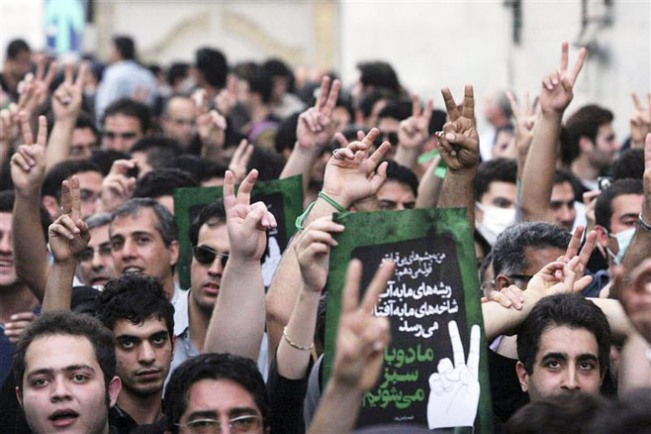
What I find very interesting about the riots is, similar to the Iranian election riots in 2009, there were A LOT of younger citizens protesting. Yes, there were opposition leaders and people from all parts of Tunisian society taking part in the protests. However, from looking at quite a few photos of the situation, I saw that the majority of those were younger people. The scene of the youth protesting a strict regime, something that some has argued that would happen for years, has actually turned into realty. The fact the conservative Arab governments- pro-western or not- do not reform in order to promote economic growth seems to be a troubling problem.
The youth are left between a rock and a hard place. Do they leave for work? Do they stay and protest? Do they become radicalized?
What we saw in Tunisia can likely happen to other governments if they do not respond to their people's needs. Though Tunisia is not a rentier state, the process which brought the end to Ben Ali could be a very similar end to other leaders. Protests from ignored citizens were able to bring down a virtual dictator. Leaders should take notes, if they don't care for the needs of their citizens, they might be sent packing.
The Iranians may have not been able to bring change in 2009, but the Tunisians showed the world it was possible in 2011.
Tunisia 2011:

Iran 2009:

The protests came in light of worsening standards of living, censorship and higher food prices (something to keep a tab on this year, as increasingly mentioned by FP).
What I find very interesting about the riots is, similar to the Iranian election riots in 2009, there were A LOT of younger citizens protesting. Yes, there were opposition leaders and people from all parts of Tunisian society taking part in the protests. However, from looking at quite a few photos of the situation, I saw that the majority of those were younger people. The scene of the youth protesting a strict regime, something that some has argued that would happen for years, has actually turned into realty. The fact the conservative Arab governments- pro-western or not- do not reform in order to promote economic growth seems to be a troubling problem.
The youth are left between a rock and a hard place. Do they leave for work? Do they stay and protest? Do they become radicalized?
What we saw in Tunisia can likely happen to other governments if they do not respond to their people's needs. Though Tunisia is not a rentier state, the process which brought the end to Ben Ali could be a very similar end to other leaders. Protests from ignored citizens were able to bring down a virtual dictator. Leaders should take notes, if they don't care for the needs of their citizens, they might be sent packing.
The Iranians may have not been able to bring change in 2009, but the Tunisians showed the world it was possible in 2011.
Tunisia 2011:

Iran 2009:
Monday, November 29, 2010
The Star of the Hour: Turkey's Ahmet Davutoglu
Very convenient to what my research paper is on, foreignpolicy.com (FP) has been doing extensive pieces on the "rise of Turkey". In their list of 100 most influential people of 2010, Turkish Foreign Minister Ahmet Davutoglu is ranked #7. To get a deep insight into Davutoglu's mind, here is a piece he wrote explaining his policies. The magazine also conducted an exclusive interview with Mr. Davutoglu about his zero-problems policy. In addition, there was also a piece published refuting those who say that Turkey is moving away from democracy and the west. It does seem that FP is certainly interested in Turkey, and they should be.
My research paper aims to illustrate the reasons for Turkey's new active participation in the world and how it is not a break from the west and Europe. However, the articles FP has released tends to exaggerate how powerful Turkey is as of this moment. Don't get me wrong, through my research Turkey is certainly headed for regional power status if it maintains its course. The BRIC acronym may soon be BRIC(T). However, there are many factors FP tends to over-emphasize purely because this is new behavior for Turkey. Yes Turkey has changed its relationships with its Middle Eastern neighbors, but it is still close with Europe on multiple issues.
However, it should be noted that Turkey, with its strong economy, stable politics, and democracy has embarked on a soft power campaign in an effort to change the nature of its Middle Eastern policy. Being snubbed by Europe in EU negotiations, Mr. Davutoglu has led Turkey to turn its head and use its power for further participation in world affairs. If you can't join them, make them want you.
Is that the real policy of Turkey? Gain power on the international stage so it would make Turkey a prized member of the EU? I certainly don't know for sure, but it does seem so. Its partnership with Brazil, half a world away, demonstrates the changing of the policy of Turkey. Never before has modern Turkey been so deeply involved in world affairs. Turkey is making its own path, but not as drastic as everyone makes it out to be. It is still dependent on Europe in economic terms and social terms. However, kudos to Davutoglu, he's effectively shaped his nation.
 |
| Foreign Minister Ahmet Davutoglu |
My research paper aims to illustrate the reasons for Turkey's new active participation in the world and how it is not a break from the west and Europe. However, the articles FP has released tends to exaggerate how powerful Turkey is as of this moment. Don't get me wrong, through my research Turkey is certainly headed for regional power status if it maintains its course. The BRIC acronym may soon be BRIC(T). However, there are many factors FP tends to over-emphasize purely because this is new behavior for Turkey. Yes Turkey has changed its relationships with its Middle Eastern neighbors, but it is still close with Europe on multiple issues.
However, it should be noted that Turkey, with its strong economy, stable politics, and democracy has embarked on a soft power campaign in an effort to change the nature of its Middle Eastern policy. Being snubbed by Europe in EU negotiations, Mr. Davutoglu has led Turkey to turn its head and use its power for further participation in world affairs. If you can't join them, make them want you.
Is that the real policy of Turkey? Gain power on the international stage so it would make Turkey a prized member of the EU? I certainly don't know for sure, but it does seem so. Its partnership with Brazil, half a world away, demonstrates the changing of the policy of Turkey. Never before has modern Turkey been so deeply involved in world affairs. Turkey is making its own path, but not as drastic as everyone makes it out to be. It is still dependent on Europe in economic terms and social terms. However, kudos to Davutoglu, he's effectively shaped his nation.
Thursday, November 18, 2010
President George H.W. Bush Ran a Very Smart Strategy
President George H.W. Bush gave this speech to the United States when commencing the Gulf War (sorry for the title, but is the shortest clip I could find). In his speech, he notes that there is a broad coalition of support for the war against Iraq. He also laments that force had to be used, after diplomatic options have been exhausted. Personally, and I think many would agree with me, I believe President Bush was spot on. The president and/or those advising him understood the international order and the necessities of multilateral diplomacy to achieve desired results.
In Fareed Zakaria's The Post American World, he makes note that America has to procure a "cadre" of international support in the modern era (not that 1991 wasn't modern, but things have changed). I completely agree with this. The support of this concept may reflect the neo-liberal part of me, but if the past decade has been any indication, it is that Zakaria is right. Yes, we did have allies go into Iraq with us in 2003, but it lacked the international legitimacy that we had in 1991. In 1991, we had a UN resolution behind us, and the fact that we tried extensive state diplomacy and public diplomacy. William Rugh's American Encounters with Arabs gives a detailed account into the diplomatic actions President Bush took before resorting to force.
In the modern international order, the U.S. cannot afford to act unilaterally anymore. As shown by the Gulf War example, the U.S. showed leadership without unilateral action. This concept is indeed possible. Now, I am not saying that we always need that broad of a coalition, but the U.S. should pursue policy similar of gaining international consensus, especially for actions in the Middle East. The situation in Iraq was efficiently diffused through smart diplomacy. By exhausting diplomatic options, it sent a clear signal that the U.S. tried a multitude of different options before calling for force. This increased the view of the U.S. among many in the world not as a benevolent hegemon, but as a responsible leader. In what looks like a decreasing sense of U.S. hegemony, I think it would be smart to heed Zakaria's points. A more multilateral foreign policy should be good for U.S. policies in containing Chinese influence and for our Middle Eastern relations. American Exceptionalism (which often translates into unilateralism) is not a bad idea, but it lacks proper place in the current world system.
Whether some want to believe or not, the world is much more interconnected than ever before. In a world entangled in the web of technology (no pun intended), it is imperative the U.S. adapt and pursue policies similar to the way George H.W. Bush handled the the pre-action and Gulf War. He did it right. The age of unilateralism for large operations is over...for now.

Monday, October 18, 2010
Wikileaks a Revolution in Journalism? I'd Call it Vigilantism.
Wikileaks, a website founded by Julian Assange, is an "international organization that publishes anonymous submissions and leaks of otherwise unavailable documents while preserving the anonymity of sources" (Here's where i got that definition). Making world headlines with the posting of a graphic video of a helicopter gunman shooting down innocent Iraqi civilians, but at the time thought to be terrorists. Over the summer, Assange's website again made headlines with the posting of more than 77,000 U.S. war documents from Afghanistan. Now, Wikileaks announced it will be releasing around 400,000 Iraqi War documents. 400,000! Where does Mr. Assange get the mandate that allows him to do this?
In Jonathan Stray's Foreign Policy article, Is this the Future of Journalism?, he ends with saying that "no journalist I've spoken to will speak ill of Wikileaks in private: Every reporter understands that Wikileaks is the thin end of the wedge. If they can't run a dangerous story, no one can." Stray makes a good point here. Wikileaks is the embodiment of the freedom of the press. Freedom of the press is important for society and does indeed hold government accountable.
However, posting classified war documents endangering the safety of U.S. forces and damaging U.S. foreign policy is, I believe, over the line of journalism to vigilantism.
Though Wikileaks has held the release of some important documents and blotched out names, that doesnt change the fact they obtained the documents without permission of their owner; the U.S. government. If one were to publish something you wrote without your permission, would that be fair and legal? I think not.
What gives Mr. Assange the legal right to publish documents that aren't his? Not only is he violating the concept of sovereignty, he is also putting lives in danger. No longer is this journalism, it is vigilantism. According to Merriam-Webster dictionary, a vigilante is: a member of a volunteer committee organized to suppress and punish crime summarily (as when the processes of law are viewed as inadequate); broadly : a self-appointed doer of justice. When does Mr. Assange have the international power and legitimacy to declare U.S. sovereignty of documents illegal? To answer the question, he does not.
Wikileaks brings up an important trend in international politics: the rise of non-state actors due to the internet and technology. In one of my past blog posts, I asserted that terrorist organizations are aided by technology in recruiting, communicating, and funded operatives around the world. Just as the internet has aided non-state terrorist organizations, it is also aiding the development of websites which some states cannot hold their owner accountable. The prime example is Wikileaks. There is no state which published this material. It was the website of one man, Mr. Assange, who committed the crime (yes, I do view this as a crime). The U.S. has no jurisdiction to arrest him in another country, and has no means to shut down the website. Thus, the rise of internet related non-state actor/individuals are new to the international security scene.
I am all for free speech, but Mr. Assange and Wikileaks crosses a fine line. This is not heroic journalism, it is one man taking the law into his own hands; a vigilante. If Mr. Assange thinks he is a real-life Batman, well, he is far from it.
In Jonathan Stray's Foreign Policy article, Is this the Future of Journalism?, he ends with saying that "no journalist I've spoken to will speak ill of Wikileaks in private: Every reporter understands that Wikileaks is the thin end of the wedge. If they can't run a dangerous story, no one can." Stray makes a good point here. Wikileaks is the embodiment of the freedom of the press. Freedom of the press is important for society and does indeed hold government accountable.
However, posting classified war documents endangering the safety of U.S. forces and damaging U.S. foreign policy is, I believe, over the line of journalism to vigilantism.
Though Wikileaks has held the release of some important documents and blotched out names, that doesnt change the fact they obtained the documents without permission of their owner; the U.S. government. If one were to publish something you wrote without your permission, would that be fair and legal? I think not.
What gives Mr. Assange the legal right to publish documents that aren't his? Not only is he violating the concept of sovereignty, he is also putting lives in danger. No longer is this journalism, it is vigilantism. According to Merriam-Webster dictionary, a vigilante is: a member of a volunteer committee organized to suppress and punish crime summarily (as when the processes of law are viewed as inadequate); broadly : a self-appointed doer of justice. When does Mr. Assange have the international power and legitimacy to declare U.S. sovereignty of documents illegal? To answer the question, he does not.
Wikileaks brings up an important trend in international politics: the rise of non-state actors due to the internet and technology. In one of my past blog posts, I asserted that terrorist organizations are aided by technology in recruiting, communicating, and funded operatives around the world. Just as the internet has aided non-state terrorist organizations, it is also aiding the development of websites which some states cannot hold their owner accountable. The prime example is Wikileaks. There is no state which published this material. It was the website of one man, Mr. Assange, who committed the crime (yes, I do view this as a crime). The U.S. has no jurisdiction to arrest him in another country, and has no means to shut down the website. Thus, the rise of internet related non-state actor/individuals are new to the international security scene.
I am all for free speech, but Mr. Assange and Wikileaks crosses a fine line. This is not heroic journalism, it is one man taking the law into his own hands; a vigilante. If Mr. Assange thinks he is a real-life Batman, well, he is far from it.
Monday, October 11, 2010
Nuclear Proliferation in the Middle East and abroad: I can't think of a worse idea.
As we were going over the chart of the different views on nuclear proliferation, I couldn't help but wonder why anyone would encourage the spread of nuclear weapons. Though their reasoning is that if states had equal access to nuclear weapons, this would stem violence because states would each have MAD (Mutually Assured Destruction) power. This reasoning is ideal.
Those who follow this view fail to incorporate is the human element.
States act unreasonably because humans are sometimes unreasonable. One may do something knowingly adverse to themselves because they want to. Now is there any logic in this? Nope. So giving states access to the most powerful weapons known to man is logical? Not even. Middle Eastern states have shown that they are prone to make illogical decisions. Also, there is much conflict in the region, so how would it be a good things to have each state blast the other up at any moment? There is already too much tension in the region.
In addition, states with low stability or experience internal conflicts pose the threat of having non-state actors use these weapons for their own goals. Since non-state actors do not have defined borders, it would be impossible to retaliate without destroying another country. Internal conflicts in states could turn global if one side possess a nuclear weapon.
Moreover, many nuclear bombs going off would be an environmental disater. If one thinks the bombs dropped on Japan caused radiation damage, nuclear warheads toady are much, much, much stronger. Many people would die, environments would be destroyed, and Earth as we know it may become uninhabitable. To those that think proliferation is a good thing (not that I think anyone in class does), is that the type of future you would want?
Though the spread of nuclear weapons may be somewhat inevitable (unless states completely destroy the ways and technologies to build them) it is imperative that nuclear weapons must be safeguarded. For the Middle East, the lack of nuclear weapons preserves regional power, and also serves as a balance of power between the different states. I really don't want a future with this in it:

Those who follow this view fail to incorporate is the human element.
States act unreasonably because humans are sometimes unreasonable. One may do something knowingly adverse to themselves because they want to. Now is there any logic in this? Nope. So giving states access to the most powerful weapons known to man is logical? Not even. Middle Eastern states have shown that they are prone to make illogical decisions. Also, there is much conflict in the region, so how would it be a good things to have each state blast the other up at any moment? There is already too much tension in the region.
In addition, states with low stability or experience internal conflicts pose the threat of having non-state actors use these weapons for their own goals. Since non-state actors do not have defined borders, it would be impossible to retaliate without destroying another country. Internal conflicts in states could turn global if one side possess a nuclear weapon.
Moreover, many nuclear bombs going off would be an environmental disater. If one thinks the bombs dropped on Japan caused radiation damage, nuclear warheads toady are much, much, much stronger. Many people would die, environments would be destroyed, and Earth as we know it may become uninhabitable. To those that think proliferation is a good thing (not that I think anyone in class does), is that the type of future you would want?
Though the spread of nuclear weapons may be somewhat inevitable (unless states completely destroy the ways and technologies to build them) it is imperative that nuclear weapons must be safeguarded. For the Middle East, the lack of nuclear weapons preserves regional power, and also serves as a balance of power between the different states. I really don't want a future with this in it:

Thursday, October 7, 2010
Do Rentier states impede democracy and economic liberalization?
This is the last question on today's sliderocket. We briefly answered it in class, but I would like to talk about the question more.
A rentier state, as we discussed, is a state which derives most its income from collecting rent rather than taxes. The Pathology of Oil by Ross also does a great job in explaining this too. An example, the one we used in class, is Egypt collecting rent from ships using the Suez canal. The government usually spends this high income on the state and programs for its citizens. However, since the government doesn't (or minimally) tax the people, it does not need to provide adequate representation. "No representation without taxation", as Professor Webb wrote on the board. Thus, subscribing to this idea, states do not need to listen to its populace for governance. I am not endorsing this style of leadership, its just a fact. Look a Kuwait or Saudi Arabia for other examples.
Since leaders do not have to listen to their people, as they are only being minimally to not taxed while using the states' services, it continues autocratic rule. Why would a state need democracy, if they are getting income and providing its citizens? The rentier concept presents a direct hurdle to democracy, and accelerates the stability of autocratic control in the Middle East. Therefore, there are no real reasons or incentives to reform government or liberalize the economy. If one liberalizes, they have a chance of the rentier state backfiring and democracy growing.
People often wonder why democracy hasn't 'spread' to the Middle East. We discussed whether the region was "exceptional". Is it? The only way the region is "exceptional" is that it is comprised of many rentier states because of its resources. The need for oil by nations, the use of the Suez canal for shipping, and other reasons have made the rentier state possible in the region. The rentier concept, combined with history, and religion produced the region we see today.
I made a point in class that the rentier state has flaws. First, the resource or whatever the state was getting rent on could run out or become obsolete. If this happens, the state is going to need to tax and thus (eventually at least) provide representation to the people. It will also encourage the state to diversify its economy to have the people earn an income so they can continue to pay taxes. It forces the state to find other means of production such as industrializing. Industrializing leads to modernization of society; roads, electricity, technology, organizations and special interst groups. The other way the rentier state model fails is since the government is providing for its people, this often provides education. In class Milstein pointed out that education can often be conservative. This is completely true. But other times, as Professor Webb pointed out, people send there children to western or American universities. At these institutions, the children are often educated and exposed to democracy and liberty and bring it home with them. Over time, groups form and push for reform. Its a longer process.
After being exposed to this concept, I truely believe that the rentier state is a significant factor in the authoritarian presence in the Middle East. Without the rentier concept, the region would be a totally different place. Maybe once the rentier state eventually falls, we will have democracy in the region.
Speaking on democracy, and on a much lighter note, I can't resist posting this. It has absolutely no connection to this blog post, but maybe we need Robert Burck (aka The Naked Cowboy of NYC) to fix these problems as president. Maybe if he takes a picture with Arab leaders, they may decide to democratize after all. Too bad he won't be in Times Square anymore, it was a better job for him.
A rentier state, as we discussed, is a state which derives most its income from collecting rent rather than taxes. The Pathology of Oil by Ross also does a great job in explaining this too. An example, the one we used in class, is Egypt collecting rent from ships using the Suez canal. The government usually spends this high income on the state and programs for its citizens. However, since the government doesn't (or minimally) tax the people, it does not need to provide adequate representation. "No representation without taxation", as Professor Webb wrote on the board. Thus, subscribing to this idea, states do not need to listen to its populace for governance. I am not endorsing this style of leadership, its just a fact. Look a Kuwait or Saudi Arabia for other examples.
Since leaders do not have to listen to their people, as they are only being minimally to not taxed while using the states' services, it continues autocratic rule. Why would a state need democracy, if they are getting income and providing its citizens? The rentier concept presents a direct hurdle to democracy, and accelerates the stability of autocratic control in the Middle East. Therefore, there are no real reasons or incentives to reform government or liberalize the economy. If one liberalizes, they have a chance of the rentier state backfiring and democracy growing.
People often wonder why democracy hasn't 'spread' to the Middle East. We discussed whether the region was "exceptional". Is it? The only way the region is "exceptional" is that it is comprised of many rentier states because of its resources. The need for oil by nations, the use of the Suez canal for shipping, and other reasons have made the rentier state possible in the region. The rentier concept, combined with history, and religion produced the region we see today.
I made a point in class that the rentier state has flaws. First, the resource or whatever the state was getting rent on could run out or become obsolete. If this happens, the state is going to need to tax and thus (eventually at least) provide representation to the people. It will also encourage the state to diversify its economy to have the people earn an income so they can continue to pay taxes. It forces the state to find other means of production such as industrializing. Industrializing leads to modernization of society; roads, electricity, technology, organizations and special interst groups. The other way the rentier state model fails is since the government is providing for its people, this often provides education. In class Milstein pointed out that education can often be conservative. This is completely true. But other times, as Professor Webb pointed out, people send there children to western or American universities. At these institutions, the children are often educated and exposed to democracy and liberty and bring it home with them. Over time, groups form and push for reform. Its a longer process.
After being exposed to this concept, I truely believe that the rentier state is a significant factor in the authoritarian presence in the Middle East. Without the rentier concept, the region would be a totally different place. Maybe once the rentier state eventually falls, we will have democracy in the region.
Speaking on democracy, and on a much lighter note, I can't resist posting this. It has absolutely no connection to this blog post, but maybe we need Robert Burck (aka The Naked Cowboy of NYC) to fix these problems as president. Maybe if he takes a picture with Arab leaders, they may decide to democratize after all. Too bad he won't be in Times Square anymore, it was a better job for him.
Thursday, September 23, 2010
Is Terrorism a result of globalization? Of the 'clash of civilizations'?
For this post I am going to respond to the question in the sliderocket (as pointed out by Professor Webb) : "Is Terrorism a result of globalization? Of the 'clash of civilization'?". This is two-sided question, so I am going to attempt to answer each part.
1) "Is terrorism a result of globalization?"
Is terrorism as a concept a result of globalization? Certainly not. Terrorism goes back thousands of years and is present through many different societies. Terrorism is not something new to the human experience.
However, terrorism has become more dangerous and more effective through globalization.
With the development of new technologies and more advanced weaponry, the ability to conduct terrorist activities, at least in my view, has become easier. In addition, through the new global media and through the internet, terrorists are able to communicate to infinite more people and secure more resources than ever before. For instance, Al-Qaeda has been able to spread their message across the world through viral videos and other material. In addition, the Al Qaeda leadership was (and still) able to recruit, train, fund, and communicate with operatives abroad. Without the internet or global media, it would be much more difficult to do this. The fact that the world is more interconnected also makes terrorism more potent. A bomb in New York or London affects the markets and policies in China, India and Europe. An attack in one part of the world sends ripples across the globe; making the message and intent even clearer. Actions are no longer localized; they're globalized. The ease at recruiting, training, funding, and communicating has eased and perhaps spurred terrorist activities across the globe. Terrorism is not the result of globalization, but it is certainly aided and received more potency due to the results of globalization and an increasing interconnected world.
2) "Is terrorism a result of the clash of civilizations?"
Both yes and no. Cultures have blended and mixed for thousands of years. Look at Hellenism. It is a hybrid of classical cultures. Was there terrorism back then? Maybe, but nothing historically huge that I can see. If terrorism was directly because of the clash of cultures, then wouldn't American have many, many terrorist organizations? Of course there have been terrorist groups that have sprang up in all parts of the globe through time, and there has been much animosity between different nationalities. In my view, terrorism is a product in of 'the clash of civilizations' in the new way globalization has opened cultures up to each other. Let me clarify. Now, more than ever before, people of different cultures, nationalities, and beliefs are interacting with each other. Each has their own views on how the world works, what's right and wrong, etc. etc. In addition, companies, products and beliefs from every part of the world are entering regions where there was ether minimal contact, or weren't exposed before. Some people and groups, see this new, large influx of ideas as a threat to their traditional values and ways of living. Some groups go through the proper channels in government and sometimes get their voices heard. Others (ether because of government, lack of education or other) resort to violence to get their point across.
The feeling that one's culture is being imposed upon is not something new, but the way it is happening with technology is. Thus, through the use of global technology and interconnection we see a rise in terrorist activties by the 'clash of civilizations'.
Globalization is new to the world, and no one has quite figured out all its implications, and how to adequately deal with it. However, a rise and ease of terrorism is certainly a factor and result of a globalizing world. In an age where a World War III scenario would destroy all life on earth, conventional wars between sovereign powers are substantially declining, and the intense mixture of culture; terrorism has filled the gap for violence quite nicely.
1) "Is terrorism a result of globalization?"
Is terrorism as a concept a result of globalization? Certainly not. Terrorism goes back thousands of years and is present through many different societies. Terrorism is not something new to the human experience.
However, terrorism has become more dangerous and more effective through globalization.
With the development of new technologies and more advanced weaponry, the ability to conduct terrorist activities, at least in my view, has become easier. In addition, through the new global media and through the internet, terrorists are able to communicate to infinite more people and secure more resources than ever before. For instance, Al-Qaeda has been able to spread their message across the world through viral videos and other material. In addition, the Al Qaeda leadership was (and still) able to recruit, train, fund, and communicate with operatives abroad. Without the internet or global media, it would be much more difficult to do this. The fact that the world is more interconnected also makes terrorism more potent. A bomb in New York or London affects the markets and policies in China, India and Europe. An attack in one part of the world sends ripples across the globe; making the message and intent even clearer. Actions are no longer localized; they're globalized. The ease at recruiting, training, funding, and communicating has eased and perhaps spurred terrorist activities across the globe. Terrorism is not the result of globalization, but it is certainly aided and received more potency due to the results of globalization and an increasing interconnected world.
2) "Is terrorism a result of the clash of civilizations?"
Both yes and no. Cultures have blended and mixed for thousands of years. Look at Hellenism. It is a hybrid of classical cultures. Was there terrorism back then? Maybe, but nothing historically huge that I can see. If terrorism was directly because of the clash of cultures, then wouldn't American have many, many terrorist organizations? Of course there have been terrorist groups that have sprang up in all parts of the globe through time, and there has been much animosity between different nationalities. In my view, terrorism is a product in of 'the clash of civilizations' in the new way globalization has opened cultures up to each other. Let me clarify. Now, more than ever before, people of different cultures, nationalities, and beliefs are interacting with each other. Each has their own views on how the world works, what's right and wrong, etc. etc. In addition, companies, products and beliefs from every part of the world are entering regions where there was ether minimal contact, or weren't exposed before. Some people and groups, see this new, large influx of ideas as a threat to their traditional values and ways of living. Some groups go through the proper channels in government and sometimes get their voices heard. Others (ether because of government, lack of education or other) resort to violence to get their point across.
The feeling that one's culture is being imposed upon is not something new, but the way it is happening with technology is. Thus, through the use of global technology and interconnection we see a rise in terrorist activties by the 'clash of civilizations'.
Globalization is new to the world, and no one has quite figured out all its implications, and how to adequately deal with it. However, a rise and ease of terrorism is certainly a factor and result of a globalizing world. In an age where a World War III scenario would destroy all life on earth, conventional wars between sovereign powers are substantially declining, and the intense mixture of culture; terrorism has filled the gap for violence quite nicely.
Subscribe to:
Posts (Atom)