
Showing posts with label Arab Revolutions. Show all posts
Showing posts with label Arab Revolutions. Show all posts
Wednesday, March 30, 2011
Pictures speak Louder than Words
There is much criticism over President Obama's handling of Libya. I am not saying that some of this criticism is unwarranted, because it is rightly deserved, but most of it is ironic flip-flopping done by the opposition. I think this cartoon adequately sums up that no matter what our President did, he would be lampooned. Keep doing what your doing President Obama, don't forget you still have a lot of supporters out there.


Thursday, February 10, 2011
James Traub backs me up
James Traub recently wrote an article on FP echoing my sentiments about the Muslim Brotherhood, and why they aren't such a threat.
He is a regular writer for FP, and I even included a link to who he is. I think the article underscores the ideas that I put out in my previous post. Take a look at both (hopefully mine first).
Side Note
It should also be noted that the same goes for Turkey's AKP. They aren't a threat, and the hostility towards them just because they are an Islamic rooted party is illogical. Country before self interest, and if specific people in Congress and the State Department thought the same way, we'd be great friends again with Turkey. Turkey is a friend we're going to need.
He is a regular writer for FP, and I even included a link to who he is. I think the article underscores the ideas that I put out in my previous post. Take a look at both (hopefully mine first).
Side Note
It should also be noted that the same goes for Turkey's AKP. They aren't a threat, and the hostility towards them just because they are an Islamic rooted party is illogical. Country before self interest, and if specific people in Congress and the State Department thought the same way, we'd be great friends again with Turkey. Turkey is a friend we're going to need.
Monday, February 7, 2011
A Government with the Muslim Bortherhood is not the End of the World, and why these protests help the War on Terror
In the turmoil that has erupted in Egypt over the past weeks, there is much speculation of what the government is going to look like post-Mubarak. I, along with many others, think its going to be far more democratic, and a new government will be formed with parties from all aspects of Egyptian society.
What many in the U.S. have picked up on is the "threat" of the Muslim Brotherhood; an opposition political party. Newt Gingrich, a prominent conservative and former House Speaker, certainly thinks the Muslim Brotherhood is a threat and turn America into an Islamic state too. He said the same of Turkey's AKP.
Both are not true. This, yet another wrong and misleading comment coming from someone who most likely will run for president. Even if he doesn't run, a national leader shouldn't make comments where he is so ill-informed in foreign policy.
Let me explain why he is wrong.
There are many mixed perceptions of the Muslim Brotherhood. Yes, they have committed acts of violence in the past and is an Islamic rooted party. Fast forward to the present day. Yes, they may still have an extremist wing which is a legitimate security concern. But now I ask, what political party doesn't have an extremist wing? If the Muslim Brotherhood is to lead Egypt, it will have to create a coalition. The party alone cannot with the election; there is just not enough support. If they are to get a figure to the presidency, they will have to negotiate with the secular forces in Egypt. This will moderate the Muslim Brotherhood if they are to stay in power. That is a fact for all politics. I highly doubt that the majority of the Egyptian people, especially the youth, want a state like Iran. Its just not going to happen.
Another reason why so many are 'terrified' of the Muslim Brotherhood is because their stance on Israel and the U.S. Yes, they are no Mubarak. People have to come to terms with the fact they are an Islamic rooted party. That's not always the end of the world. By a recent opinion poll, the majority of the Egyptians don't like us anyway! So we already lost that battle. Also, per the Camp David Accords, a continued peace with Israel means massive funding and aid to the army and the government. If a Muslim Brotherhood figure (lets say they get to the presidency) were to not honor the accords; the army would be up in arms (no pun intended) and I am sure many would be displeased with the lack of funding and possible U.S. trade sanctions. The same goes for the Suez Canal; its not in Egypt's interests to change its Israeli or its U.S. policy. It would undermine their security and clout in the region.
If the Muslim Brotherhood ascends to the presidency, it may actually be good for the U.S. A working relationship with a moderated but still conservative Muslim Brotherhood could show the world that we can work with Islamic rooted parties. Though the relationship with Turkey's AKP is a more complicated story (one for another time), it may boost our points with the Middle East. It also show's the world we're willing to work with others we may not see face-to-face with. Cooperation is the word.
So the Muslim Brotherhood isn't the end of the world. Yes, we won't have an ally like Mubarak, but its no end game by far.

Now on to the second part of this post: the protests are helping the War on Terror.
Why does terrorism happen?
Well that's a big question. One reason, which I saw through my class on the Middle East last semester, is because people's governments do not respond to their needs. In Egypt and Tunisia, there were no economic reforms for the people. There was massive unemployment. This anger and rage translates into support for groups that are radical (or want to overthrow the government) or in some cases, the people join radical organizations to secure a better future.
These protests are making the government listen up and reform. In the Tunisian case, the president straight up left. Reforms to encourage a healthy economy and happy people have the potential to make radical organizations seem, well, radical. People like to do well, and violent change often doesn't appeal with those who like the status quo. If the people of the Middle East succeed in making their governments listen and these reforms give more freedoms, and stimulate the economies; it could be a help to curbing radicalization and thus terrorism. The War on Terrorism is a war on ideas and minds. To make terror unappealing is to make one's people happy. Good government is a responsive and fair government. These protests are just what the region needed to cleanse devastating policies.

What many in the U.S. have picked up on is the "threat" of the Muslim Brotherhood; an opposition political party. Newt Gingrich, a prominent conservative and former House Speaker, certainly thinks the Muslim Brotherhood is a threat and turn America into an Islamic state too. He said the same of Turkey's AKP.
Both are not true. This, yet another wrong and misleading comment coming from someone who most likely will run for president. Even if he doesn't run, a national leader shouldn't make comments where he is so ill-informed in foreign policy.
Let me explain why he is wrong.
There are many mixed perceptions of the Muslim Brotherhood. Yes, they have committed acts of violence in the past and is an Islamic rooted party. Fast forward to the present day. Yes, they may still have an extremist wing which is a legitimate security concern. But now I ask, what political party doesn't have an extremist wing? If the Muslim Brotherhood is to lead Egypt, it will have to create a coalition. The party alone cannot with the election; there is just not enough support. If they are to get a figure to the presidency, they will have to negotiate with the secular forces in Egypt. This will moderate the Muslim Brotherhood if they are to stay in power. That is a fact for all politics. I highly doubt that the majority of the Egyptian people, especially the youth, want a state like Iran. Its just not going to happen.
Another reason why so many are 'terrified' of the Muslim Brotherhood is because their stance on Israel and the U.S. Yes, they are no Mubarak. People have to come to terms with the fact they are an Islamic rooted party. That's not always the end of the world. By a recent opinion poll, the majority of the Egyptians don't like us anyway! So we already lost that battle. Also, per the Camp David Accords, a continued peace with Israel means massive funding and aid to the army and the government. If a Muslim Brotherhood figure (lets say they get to the presidency) were to not honor the accords; the army would be up in arms (no pun intended) and I am sure many would be displeased with the lack of funding and possible U.S. trade sanctions. The same goes for the Suez Canal; its not in Egypt's interests to change its Israeli or its U.S. policy. It would undermine their security and clout in the region.
If the Muslim Brotherhood ascends to the presidency, it may actually be good for the U.S. A working relationship with a moderated but still conservative Muslim Brotherhood could show the world that we can work with Islamic rooted parties. Though the relationship with Turkey's AKP is a more complicated story (one for another time), it may boost our points with the Middle East. It also show's the world we're willing to work with others we may not see face-to-face with. Cooperation is the word.
So the Muslim Brotherhood isn't the end of the world. Yes, we won't have an ally like Mubarak, but its no end game by far.

Now on to the second part of this post: the protests are helping the War on Terror.
Why does terrorism happen?
Well that's a big question. One reason, which I saw through my class on the Middle East last semester, is because people's governments do not respond to their needs. In Egypt and Tunisia, there were no economic reforms for the people. There was massive unemployment. This anger and rage translates into support for groups that are radical (or want to overthrow the government) or in some cases, the people join radical organizations to secure a better future.
These protests are making the government listen up and reform. In the Tunisian case, the president straight up left. Reforms to encourage a healthy economy and happy people have the potential to make radical organizations seem, well, radical. People like to do well, and violent change often doesn't appeal with those who like the status quo. If the people of the Middle East succeed in making their governments listen and these reforms give more freedoms, and stimulate the economies; it could be a help to curbing radicalization and thus terrorism. The War on Terrorism is a war on ideas and minds. To make terror unappealing is to make one's people happy. Good government is a responsive and fair government. These protests are just what the region needed to cleanse devastating policies.

Friday, January 28, 2011
Dominoes in Progress: Egypt and Yemen
In the aftermath of the successful Tunisian protests, Egypt and Yemen have followed suit. Under thirty years of 'president' Mubarak, the Egyptian people faced a reduction in civil liberties and censorship; such as under the emergency laws. There was no freedom of assembly.
Egyptian Mohamed ElBaradei, former head of the U.N.'s IAEA, said "the barrier of fear is broken. And it will not come back."
I thought this quote was particularly powerful. Egyptians, and most likely other Arab/North African citizens, have felt fear towards their government. This fear makes for a very unhealthy society. When people fear their governments, unrest and radicalism emerges. I think this is a universal truth.
Like I said in my last post; when governments to not respond to their people, reform for their people, and do not give their people necessary freedoms we see the mass protests going on today. Tunisia made the world see that through protest, governments can change.
Now I know that both Egypt and Yemen are different locations with different situations, but I hope that the outcome will be freer and fairer governments.
If the U.S. wants to curb anti-Americanism, now is the time for us to step up and support the values which our nation is founded on. President Obama made a reference to Tunisia and alluded to Egypt in his State of the Union speech, but more interaction and support of the Egyptian public could change minds about the U.S. throughout the Arab world; something that could be a big player. More public diplomacy is needed.
I don't think its just coincidence that Iran in 2009, and Tunisia, Egypt, and Yemen in 2011 have the same features. Generations are changing, and the freedom yearned by the current one will have its impact in due time.
Citizens should not have a "barrier of fear" towards their governments
Egypt 2011:

Egyptian Mohamed ElBaradei, former head of the U.N.'s IAEA, said "the barrier of fear is broken. And it will not come back."
I thought this quote was particularly powerful. Egyptians, and most likely other Arab/North African citizens, have felt fear towards their government. This fear makes for a very unhealthy society. When people fear their governments, unrest and radicalism emerges. I think this is a universal truth.
Like I said in my last post; when governments to not respond to their people, reform for their people, and do not give their people necessary freedoms we see the mass protests going on today. Tunisia made the world see that through protest, governments can change.
Now I know that both Egypt and Yemen are different locations with different situations, but I hope that the outcome will be freer and fairer governments.
If the U.S. wants to curb anti-Americanism, now is the time for us to step up and support the values which our nation is founded on. President Obama made a reference to Tunisia and alluded to Egypt in his State of the Union speech, but more interaction and support of the Egyptian public could change minds about the U.S. throughout the Arab world; something that could be a big player. More public diplomacy is needed.
I don't think its just coincidence that Iran in 2009, and Tunisia, Egypt, and Yemen in 2011 have the same features. Generations are changing, and the freedom yearned by the current one will have its impact in due time.
Citizens should not have a "barrier of fear" towards their governments
Egypt 2011:

Saturday, January 15, 2011
Rock the Casbah: Tunisian Edition
Tunisians certainly rocked their casbah; a new government under former President of the Tunisian Chamber of Deputies Fouad Mebazaa took power after widespread riots rocked the state. Longtime 'president' Zine el-Abidine Ben Ali fled to Saudi Arabia after the military refused orders to crack down on the protesters, and sacking many officials.
The protests came in light of worsening standards of living, censorship and higher food prices (something to keep a tab on this year, as increasingly mentioned by FP).
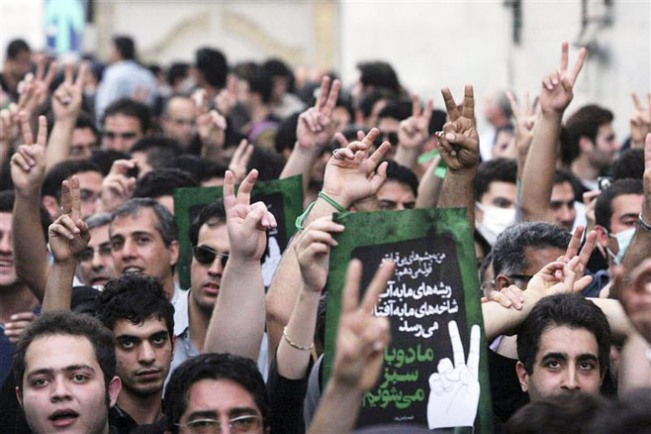
What I find very interesting about the riots is, similar to the Iranian election riots in 2009, there were A LOT of younger citizens protesting. Yes, there were opposition leaders and people from all parts of Tunisian society taking part in the protests. However, from looking at quite a few photos of the situation, I saw that the majority of those were younger people. The scene of the youth protesting a strict regime, something that some has argued that would happen for years, has actually turned into realty. The fact the conservative Arab governments- pro-western or not- do not reform in order to promote economic growth seems to be a troubling problem.
The youth are left between a rock and a hard place. Do they leave for work? Do they stay and protest? Do they become radicalized?
What we saw in Tunisia can likely happen to other governments if they do not respond to their people's needs. Though Tunisia is not a rentier state, the process which brought the end to Ben Ali could be a very similar end to other leaders. Protests from ignored citizens were able to bring down a virtual dictator. Leaders should take notes, if they don't care for the needs of their citizens, they might be sent packing.
The Iranians may have not been able to bring change in 2009, but the Tunisians showed the world it was possible in 2011.
Tunisia 2011:

Iran 2009:

The protests came in light of worsening standards of living, censorship and higher food prices (something to keep a tab on this year, as increasingly mentioned by FP).
What I find very interesting about the riots is, similar to the Iranian election riots in 2009, there were A LOT of younger citizens protesting. Yes, there were opposition leaders and people from all parts of Tunisian society taking part in the protests. However, from looking at quite a few photos of the situation, I saw that the majority of those were younger people. The scene of the youth protesting a strict regime, something that some has argued that would happen for years, has actually turned into realty. The fact the conservative Arab governments- pro-western or not- do not reform in order to promote economic growth seems to be a troubling problem.
The youth are left between a rock and a hard place. Do they leave for work? Do they stay and protest? Do they become radicalized?
What we saw in Tunisia can likely happen to other governments if they do not respond to their people's needs. Though Tunisia is not a rentier state, the process which brought the end to Ben Ali could be a very similar end to other leaders. Protests from ignored citizens were able to bring down a virtual dictator. Leaders should take notes, if they don't care for the needs of their citizens, they might be sent packing.
The Iranians may have not been able to bring change in 2009, but the Tunisians showed the world it was possible in 2011.
Tunisia 2011:

Iran 2009:
Thursday, October 7, 2010
Do Rentier states impede democracy and economic liberalization?
This is the last question on today's sliderocket. We briefly answered it in class, but I would like to talk about the question more.
A rentier state, as we discussed, is a state which derives most its income from collecting rent rather than taxes. The Pathology of Oil by Ross also does a great job in explaining this too. An example, the one we used in class, is Egypt collecting rent from ships using the Suez canal. The government usually spends this high income on the state and programs for its citizens. However, since the government doesn't (or minimally) tax the people, it does not need to provide adequate representation. "No representation without taxation", as Professor Webb wrote on the board. Thus, subscribing to this idea, states do not need to listen to its populace for governance. I am not endorsing this style of leadership, its just a fact. Look a Kuwait or Saudi Arabia for other examples.
Since leaders do not have to listen to their people, as they are only being minimally to not taxed while using the states' services, it continues autocratic rule. Why would a state need democracy, if they are getting income and providing its citizens? The rentier concept presents a direct hurdle to democracy, and accelerates the stability of autocratic control in the Middle East. Therefore, there are no real reasons or incentives to reform government or liberalize the economy. If one liberalizes, they have a chance of the rentier state backfiring and democracy growing.
People often wonder why democracy hasn't 'spread' to the Middle East. We discussed whether the region was "exceptional". Is it? The only way the region is "exceptional" is that it is comprised of many rentier states because of its resources. The need for oil by nations, the use of the Suez canal for shipping, and other reasons have made the rentier state possible in the region. The rentier concept, combined with history, and religion produced the region we see today.
I made a point in class that the rentier state has flaws. First, the resource or whatever the state was getting rent on could run out or become obsolete. If this happens, the state is going to need to tax and thus (eventually at least) provide representation to the people. It will also encourage the state to diversify its economy to have the people earn an income so they can continue to pay taxes. It forces the state to find other means of production such as industrializing. Industrializing leads to modernization of society; roads, electricity, technology, organizations and special interst groups. The other way the rentier state model fails is since the government is providing for its people, this often provides education. In class Milstein pointed out that education can often be conservative. This is completely true. But other times, as Professor Webb pointed out, people send there children to western or American universities. At these institutions, the children are often educated and exposed to democracy and liberty and bring it home with them. Over time, groups form and push for reform. Its a longer process.
After being exposed to this concept, I truely believe that the rentier state is a significant factor in the authoritarian presence in the Middle East. Without the rentier concept, the region would be a totally different place. Maybe once the rentier state eventually falls, we will have democracy in the region.
Speaking on democracy, and on a much lighter note, I can't resist posting this. It has absolutely no connection to this blog post, but maybe we need Robert Burck (aka The Naked Cowboy of NYC) to fix these problems as president. Maybe if he takes a picture with Arab leaders, they may decide to democratize after all. Too bad he won't be in Times Square anymore, it was a better job for him.
A rentier state, as we discussed, is a state which derives most its income from collecting rent rather than taxes. The Pathology of Oil by Ross also does a great job in explaining this too. An example, the one we used in class, is Egypt collecting rent from ships using the Suez canal. The government usually spends this high income on the state and programs for its citizens. However, since the government doesn't (or minimally) tax the people, it does not need to provide adequate representation. "No representation without taxation", as Professor Webb wrote on the board. Thus, subscribing to this idea, states do not need to listen to its populace for governance. I am not endorsing this style of leadership, its just a fact. Look a Kuwait or Saudi Arabia for other examples.
Since leaders do not have to listen to their people, as they are only being minimally to not taxed while using the states' services, it continues autocratic rule. Why would a state need democracy, if they are getting income and providing its citizens? The rentier concept presents a direct hurdle to democracy, and accelerates the stability of autocratic control in the Middle East. Therefore, there are no real reasons or incentives to reform government or liberalize the economy. If one liberalizes, they have a chance of the rentier state backfiring and democracy growing.
People often wonder why democracy hasn't 'spread' to the Middle East. We discussed whether the region was "exceptional". Is it? The only way the region is "exceptional" is that it is comprised of many rentier states because of its resources. The need for oil by nations, the use of the Suez canal for shipping, and other reasons have made the rentier state possible in the region. The rentier concept, combined with history, and religion produced the region we see today.
I made a point in class that the rentier state has flaws. First, the resource or whatever the state was getting rent on could run out or become obsolete. If this happens, the state is going to need to tax and thus (eventually at least) provide representation to the people. It will also encourage the state to diversify its economy to have the people earn an income so they can continue to pay taxes. It forces the state to find other means of production such as industrializing. Industrializing leads to modernization of society; roads, electricity, technology, organizations and special interst groups. The other way the rentier state model fails is since the government is providing for its people, this often provides education. In class Milstein pointed out that education can often be conservative. This is completely true. But other times, as Professor Webb pointed out, people send there children to western or American universities. At these institutions, the children are often educated and exposed to democracy and liberty and bring it home with them. Over time, groups form and push for reform. Its a longer process.
After being exposed to this concept, I truely believe that the rentier state is a significant factor in the authoritarian presence in the Middle East. Without the rentier concept, the region would be a totally different place. Maybe once the rentier state eventually falls, we will have democracy in the region.
Speaking on democracy, and on a much lighter note, I can't resist posting this. It has absolutely no connection to this blog post, but maybe we need Robert Burck (aka The Naked Cowboy of NYC) to fix these problems as president. Maybe if he takes a picture with Arab leaders, they may decide to democratize after all. Too bad he won't be in Times Square anymore, it was a better job for him.
Subscribe to:
Posts (Atom)